


Is your dog itching a lot? Excessive dog itching can be distressing for both you and your pet, especially if they sleep in the same room as you. From constant licking and scratching to red, irritated skin, these signs often point to an underlying issue. Pet parents who sleep with or near their dog will be familiar with broken sleep due to the thumping of paws and the sound of itching and shaking. Let’s explore what might be causing your dog’s discomfort, how to tell the difference between similar signs, and what steps you can take to help your dog feel better.
What are the most common signs of dog skin problems?
The severity of signs can vary, depending on the underlying cause, but the most common signs of dog skin problems are:
Scratching
Head shaking. This may be due to things like parasites on or in the ear, but can also be due to inflamed ears from a food or environmental allergy.
Chewing skin
Excessive licking
Hair loss and bald patches
Red, inflamed areas of skin
Scabs and crusts
Pustules and weeping sores
Because of self-trauma, lots of skin problems in dogs can present with almost identical signs, and it can take some time to get to the bottom of things. And we have to remember that some unfortunate dogs may have more than one skin issue at a time.
What are the most common causes of itchiness in dogs?
Parasites
- Fleas. Lots of people feel it reflects badly on them if their dog has fleas, but it's an inevitable part of a dog’s life. Fleas tend to spend their time round the neck, head and the base of the tail. If you notice your dog biting, chewing or scratching in these areas, fleas are the first thing to rule out.
A good trick to see if fleas are a problem is to look for flea dirt. Comb your dog’s fur onto a piece of white tissue. If you see dark specks, moisten the paper. If it’s dirt, the colour won’t change, but if it’s flea dirt (which is their poo full of blood), the tissue will go red.
Some dogs are very sensitive to flea bites because they are allergic to fleas’ saliva, so they may get itchy even with only the odd bite.
- Mites can cause very intense itchiness. Most mites aren’t visible with the naked eye, so your vet may need to do skin scrapes to get a diagnosis. Some mites are also contagious to humans, so look out for signs on you and your family and see a doctor if need be.
- Ticks loiter around in the countryside and wait for animals to brush past them and then hitch a ride. Ticks can cause local skin irritation where they bury their heads in the skin to feed. They can also spread certain diseases, so shouldn’t be taken lightly.
Atopic dermatitis
Also known as atopy, this is a common cause of itching in dogs. Atopic dermatitis is an allergy to environmental triggers, such as pollen, dust, dust mites, grasses and any number of other things. Many dogs with atopy are allergic to several different things. If your dog is allergic to pollen and plants, you might find they itch more in summer, while other allergens can cause itchiness all year round, such as dust mites or moulds.
Some breeds of dog are more prone to atopy than others. These include Labradors, golden retrievers, West Highland white terriers, boxers, English bulldogs, French bulldogs (or Frenchies as they are also known), Jack Russell terriers and poodles, to name a few.
Food allergy
Adverse food reactions can cause skin disease as well as intestinal problems. The most common food allergies in dogs are beef, chicken, dairy and wheat. Your vet may suggest a special diet trial for 12 weeks if a food allergy is suspected as the cause of your dog’s itchiness. Find more about how food allergies can affect your dog.
Infection
Bacterial skin infections can make your dog itchy. It can be a bit of a “chicken and egg” situation because dogs that are scratching a lot traumatise their skin, and this can lead to an infection secondary to the initial cause. In some cases, though, it’s simply an infection, and treatment with appropriate antibiotics will clear it up and stop the itching. Fungal infections can occur too.
How are dog skin problems diagnosed?
Getting to the bottom of why your dog is itching needs a logical, stepwise approach as your vet does their detective work and rules things in and out. This can take a bit of time, unless the cause is simple and obvious, so be patient with your vet. The normal process for diagnosis is:
Clinical exam. Distribution of the itchiest patches of skin and the lesions can give an idea in some cases. Your vet will also look for obvious signs of fleas or visible mites, like “walking dandruff”. Find out more about Dog Dandruff and how you can support your dog.
Skin scrapes, smears and hair plucks to rule out other mites and fungal infections.
Food elimination trial to rule out a food allergy. Your dog will need to be fed a therapeutic diet for 12 weeks and nothing else.
- Skin or blood tests for atopy.
Treatment and remedies for your itchy dog
It’s tempting to try to provide relief for your dog’s itching at home, but this can be difficult and may delay diagnosis and allow their skin disease to worsen.
Usually, the best course of action is to see your vet as soon as you are convinced there is a problem. Your vet may be able to provide immediate, welcome relief for your dog while the diagnostic process gets started. Treatments will depend on the underlying cause but may include some or all of the following:
Parasite treatment
Fleas are by far the most common cause of itching in dogs and will be ruled out first. Depending on what parasites your dog has, your vet may prescribe drops, a spot-on treatment or medicated shampoos. You may also need to treat your home.
Medications
Anti-inflammatory, antibiotic or antifungal medications may be given. Or all three! Your vet may also prescribe oral antibiotics if topical treatments are not going to be enough. Your dog may have an injection of an anti-inflammatory to give relief from the itching and break the scratch cycle.
Diet change
For dogs with food allergies and atopy, diet change can make a huge difference. Therapeutic diets for food allergy sufferers are curative for the vast majority of dogs. There are also diets available that have anti-inflammatory properties and even help restore the skin barrier function in atopic dogs. Your vet will be able to guide you to the best diet for your individual dog.
Allergy relief
Dietary change, antihistamines, or environmental management may be needed depending on what your dog is allergic to.
Immunotherapy
This is where, following testing for environmental allergies, a special, tailor-made programme is formulated for your individual dog. This is a process of desensitisation, or hypo-sensitisation as it’s also known, and involves injecting very gradually increasing levels of allergens over several months until your dog is desensitised. This works very well for some dogs, but the results can be variable.
Dog skin problems and itching can be draining for you and your dog, but with modern medicine and a logical, cooperative approach, many dogs with skin disease can lead an itch-free, happy life. Remember to always seek veterinary advice as soon as you think there is an issue. The sooner you get a diagnosis, the sooner your dog gets that so very welcome relief, and you can sleep again!
Dog itching FAQs
Why does my dog keep scratching even though I don’t see fleas?
This could be for a number of reasons. Fleas may still be the culprit. They are not always obvious and just a bite or two can spark issues in sensitive dogs. Other causes could be atopy, food allergies, other parasites and infections.
How can I tell if my dog has a food allergy?
Your vet will give you a special, therapeutic food to feed your dog for around 12 weeks. If your dog stops itching, you can either stay on that food or carry out food trials to see what they are allergic to.
What can I give my dog to stop itching naturally?
Omega three oils can help, but if your dog is itching excessively, you should see your vet. Delaying may let the self-trauma get worse and complicate diagnosis even more.
How long does it take for a food trial to show results?
Ideally, the trial should last a minimum of 12 weeks to allow time for the skin to fully heal, but many dogs start to show improvement much earlier, especially if they have gastrointestinal issues too.
Reviewed by Dr. Karen Shenoy DVM and Dr. Emma Milne BVSc FRCVS

Related products
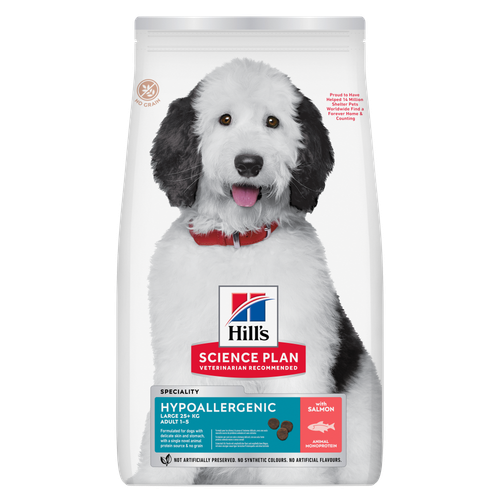
Hypoallergenic Large Breed Adult Dog Food
HILL'S SCIENCE PLAN Hypoallergenic Large breed Adult dog food with Salmon is complete pet food for adult large breed dogs 1–5 years old. It's formulated for dogs with delicate skin and stomach, with limited high quality novel protein sources & no grain.
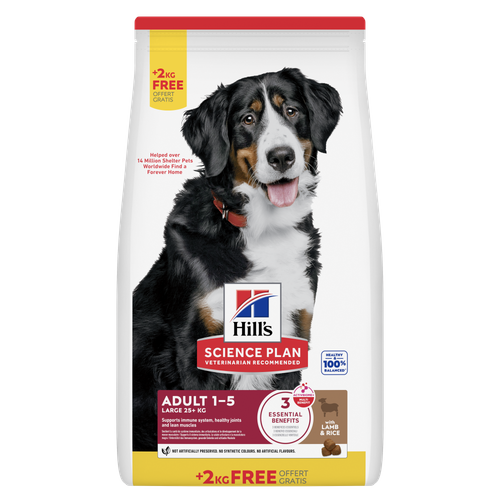
Large Breed Adult Dog Food
Hill's Science Plan Large Breed Adult Dog Food with Lamb & Rice is a complete pet food, specially formulated with ActivBiome+ Multi-Benefit Technology.
This food is specifically designed to fuel the energy needs of large breed dogs during the prime of their life.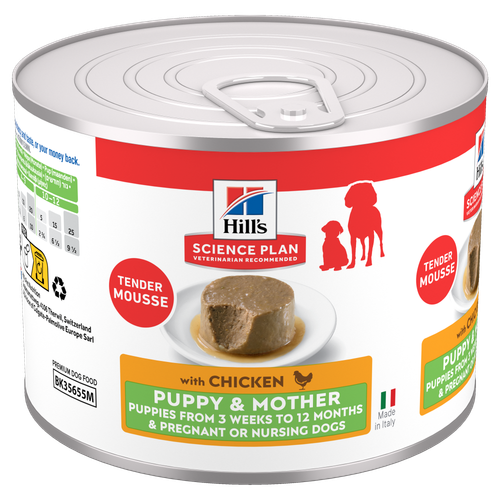
Puppy & Mother Tender Mousse Dog Food
Hill's Science Plan Puppy & Mother Tender Mousse Dog Food with Chicken is a complete premium pet food for puppies and pregnant or nursing dogs. Formulated with chicken and other specially selected ingredients, including minerals and antioxidants to support gut health and optimal growth, it comes in a soft mousse texture they'll love.
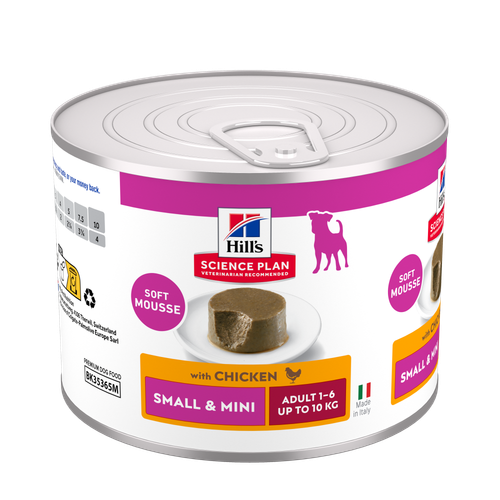
Small & Mini Adult Dog Food
Hill's Science Plan Adult Small & Mini Dog Food with Chicken is a complete premium pet food for small breed adult dogs aged 1–6 years. This deliciously smooth mousse is precisely balanced to deliver the appropriate amount of energy to support the needs of adult, small breed dogs.
Related articles

Upset Stomach - How to Help with your Dog's Upset Stomach
Learn to see the signs of an upset stomach in your dog, understand the triggers and explore some possible solutions.
What should I do about my overweight dog?
Dog obesity is a significant problem - learn more about helping your dog become trimmer and healthier through improved nutrition.
Little dog, big waistline?
Because of their little and darling – or small and scrappy – stature, they are experts at inspiring the most coddling. They can especially excel at eliciting more treats out of their owners.

Caring For a Dog with Sensitive Skin
Dogs with sensitive skin have special needs and even healthy dogs can sometimes develop poor skin health. Learn more about sensitive skin symptoms in your dog, what you can do to help your pet feel more comfortable and get recommendations on sensitive skin dog food.

Put your dog on a diet without them knowing
Our low calorie formula helps you control your dog's weight. It's packed with high-quality protein for building lean muscles, and made with purposeful ingredients for a flavourful, nutritious meal. Clinically proven antioxidants, Vitamin C+E, help promote a healthy immune system.
Put your dog on a diet without them knowing
Our low calorie formula helps you control your dog's weight. It's packed with high-quality protein for building lean muscles, and made with purposeful ingredients for a flavourful, nutritious meal. Clinically proven antioxidants, Vitamin C+E, help promote a healthy immune system.